

This is the question that stops most people before they even start. The honest answer is: sooner than you think if you are consistent, and never if you are not.
Stretching is not like strength training, where you can see and measure the change in the weights you lift. The results are felt more than seen — and they tend to sneak up on you. Here is what actually happens week by week.
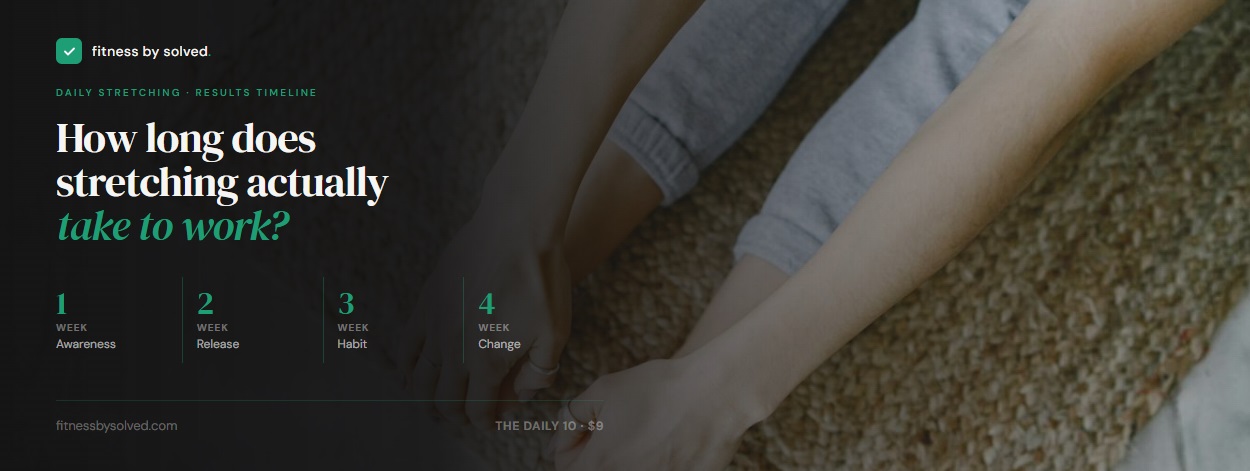
Week 1
Awareness
Your body feels stiff and some stretches are uncomfortable. This is normal — you are becoming aware of tension you have been carrying for years. Discomfort is not damage.
Week 2
Release
Morning stiffness begins to ease. The hip flexors and chest feel less locked. You notice you are sitting slightly taller without thinking about it.
Week 3
Habit
The routine starts to feel natural. You notice when you skip it. Range of motion is measurably improving — you can reach further, rotate more freely.
Week 4
Change
Visible postural improvement. Less afternoon back tension. More energy through the day. People around you may comment that something looks different.
Why Most People Quit Too Early
The most common mistake is expecting to feel dramatically different after three or four sessions. When that does not happen, the routine gets dropped.
The body does not work on a per-session basis. It responds to accumulated stimulus over days and weeks. The first week of daily stretching is not producing visible change — it is laying the neurological foundation for the change that follows.
Think of it like compound interest. Nothing seems to be happening for a while, and then suddenly you are standing taller, moving more freely, and the ache you had accepted as permanent has quietly disappeared.
The One Thing That Determines Your Results
Frequency beats intensity every time. Ten minutes daily produces better results than a 60-minute session once a week, without exception.
The reason is simple: the nervous system adapts to patterns it experiences regularly. A daily stretch signal tells the body this range of motion is required and should be maintained. An occasional stretch tells the body nothing.
A structured daily stretching routine for desk workers and busy adults. 10 exercises, 10 minutes, a 30-day plan that tracks your progress week by week. The results above are exactly what the 30-day plan is designed to produce. Instant download at fitnessbysolved.com/b/thedaily10.
Pair it with bodyweight strength training to complement your mobility work — stronger muscles hold the flexibility you build, making every stretch more effective and lasting.
─────────────────────────────────────────────────────────
Published by fitnessbysolved. · fitnessbysolved.com
Comments ()