

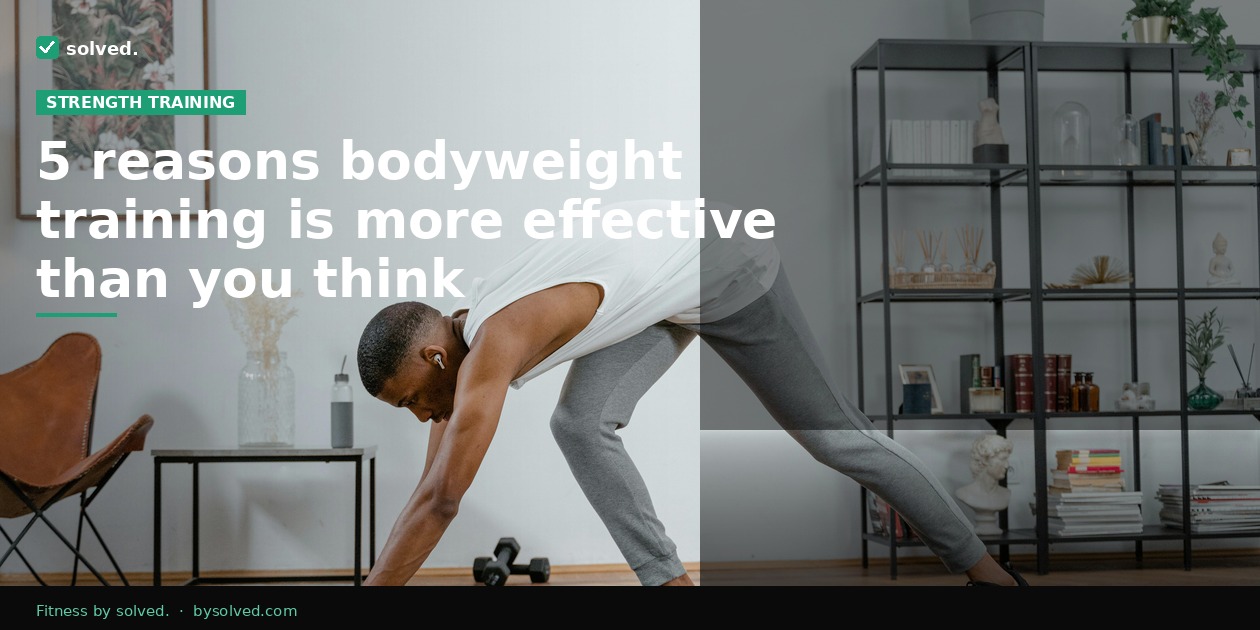
If you have ever dismissed bodyweight training as the less serious option — something you do when you cannot get to a gym — it is worth reconsidering.
- It builds real, functional strength Bodyweight exercises train your body to move and stabilise as a unit. Push-ups, squats and hinges develop the kind of strength that carries over into daily life in a way that isolated machine work often does not.
- The progression is limitless Push-ups too easy? Elevate your feet, slow the tempo, add a pause at the bottom, progress to single-arm. Every bodyweight exercise has a full spectrum of difficulty built in. You will not run out of challenge.
- You cannot cheat the movement Machines support and guide you. Bodyweight exercises do not. Every rep requires your stabilising muscles to work, which means more muscles engaged, better coordination and lower injury risk over time.
- Consistency is higher The biggest predictor of results is not the programme — it is how often you actually train. When training requires no travel, no equipment and no waiting for a machine, you do it more often.
- The results are the same Multiple studies comparing bodyweight and weighted training in untrained individuals show comparable strength and muscle gains when the training is progressive and consistent. The equipment does not build the strength. The effort does.
Download The Body 20 — 4 bodyweight sessions, 20 minutes each. Upper, lower, upper, lower. Just a mat. fitnessbysolved.com · $12
Comments ()